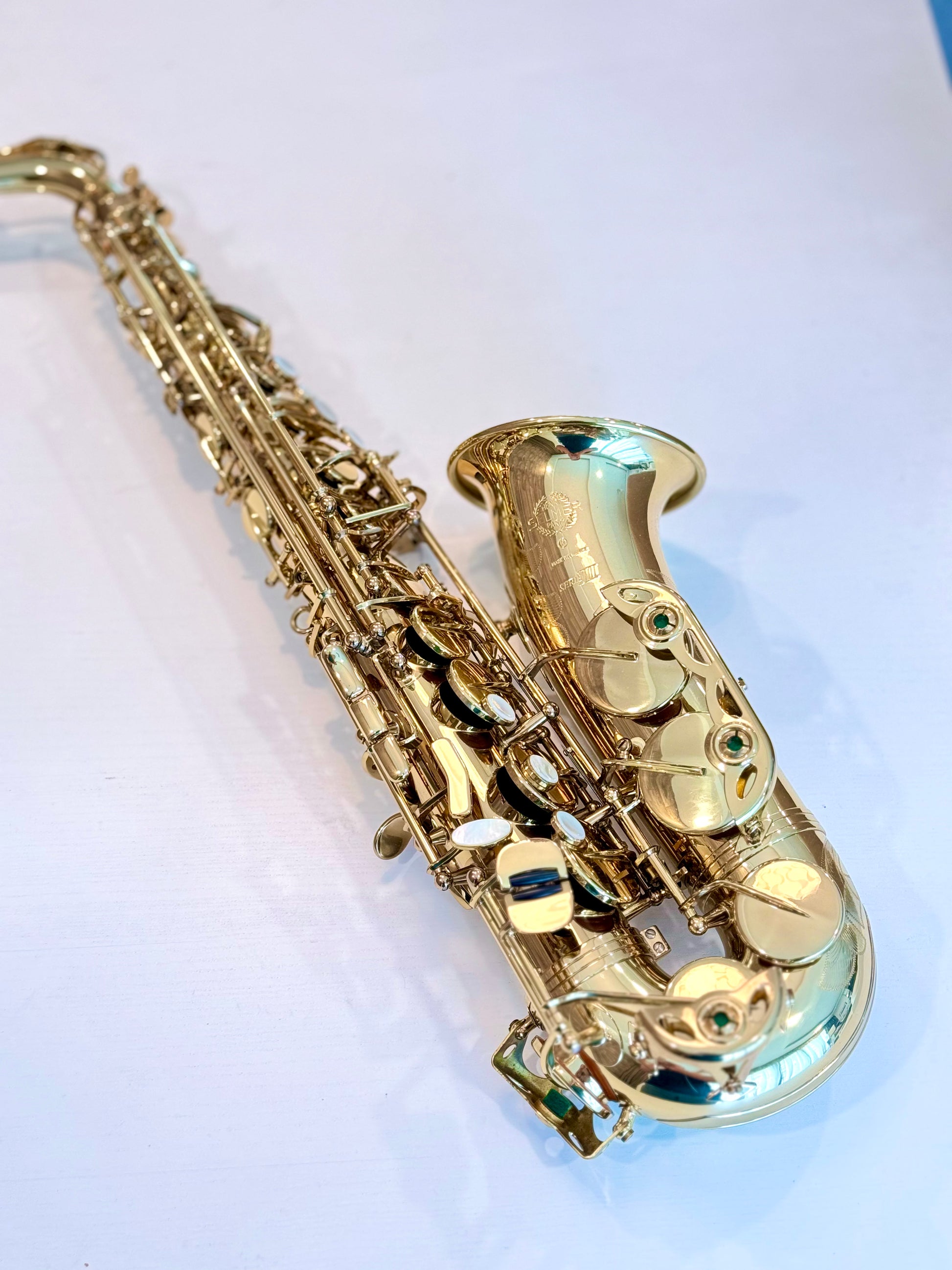
A saxophone in Malaysia costs anywhere from around RM1,500 for a budget beginner alto to RM45,000 and beyond for a new professional Selmer Paris. Most serious buyers land between RM6,000 and RM16,000, and that is exactly the bracket where pre-owned professional instruments quietly beat new student ones. This guide breaks down what saxophones actually cost here in 2026, using real Malaysian prices, including instruments we have sold ourselves, so you can see where the value sits before you spend.
We run BrassWind Exchange as working musicians. The numbers below come from current Malaysian retail listings and our own catalogue, not converted overseas prices.
How much does a saxophone cost in Malaysia?
Here are typical 2026 Malaysian prices by level, for both new and pre-owned instruments. Treat them as ranges. Brand, condition, and the ringgit exchange rate on imported instruments all move the final figure.
| LEVEL | WHAT YOU GET | NEW (2026) | PRE-OWNED (2026) |
|---|---|---|---|
| Budget beginner | Entry-level imports, unbranded or lightly branded | RM1,500 to RM3,000 | Rarely worth buying used |
| Student | A proper student alto (Yamaha YAS-280 class, Jupiter) | RM3,000 to RM8,000 | RM2,500 to RM5,000 |
| Intermediate / step-up | A professional-grade workhorse (Yamaha YAS-62 class) | RM9,000 to RM15,000 | RM6,000 to RM9,000 |
| Professional | Selmer Paris, Yamaha Custom, Yanagisawa pro models | RM18,000 to RM45,000+ | RM12,000 to RM25,000 |
Two things stand out from that table. First, the overlap: a pre-owned professional alto can cost the same as a new student model. Second, the pre-owned column is where most of the smart money goes, because saxophones hold up well when they are looked after, and the price drop from new is steep while the playing difference is small.
One honest warning on the cheapest row: a RM1,500 saxophone that will not seal properly is more expensive than it looks, because repair work to make it playable can cost more than the instrument. If the budget is tight, a well-kept used student Yamaha is the safer route.
Why do saxophone prices vary so much?
The spread comes from four things: build quality, brand, where the instrument was made, and import costs. A professional saxophone has hand-finished keywork, better pads and resonators, and tighter manufacturing tolerances, all of which cost labour. On top of that, almost every serious saxophone in Malaysia is imported, so shipping, handling, and the ringgit exchange rate are baked into the local price.
That import premium is also why pre-owned professional saxophones make so much sense here. A used instrument bought locally skips the overseas markup entirely, and you can play it before paying.
Alto, tenor, or soprano: which should you buy first?
Buy an alto first. It is the standard starting saxophone in Malaysia for good reasons: it is the most affordable of the three, the easiest to handle for younger players, and the one school bands and teachers are set up for. Spare parts, mouthpieces, and second-hand stock are all easier to find for alto than for anything else.
Tenors sound wonderful but cost noticeably more than the equivalent alto at every level, and they are heavier to hold and to fill with air. Sopranos are the hardest of the three to play in tune and are best treated as a second saxophone, not a first.
New or pre-owned: where the value really is
For saxophones, a well-kept pre-owned professional instrument almost always beats a new student one at the same price. We have watched this play out in our own catalogue.
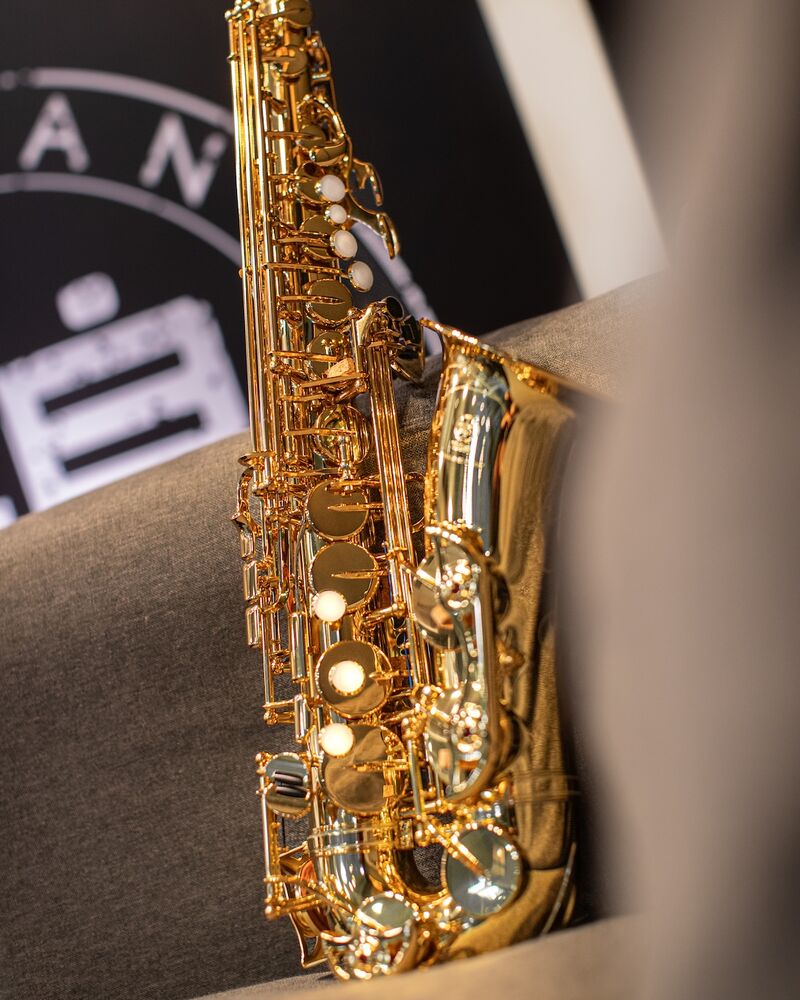
In May 2026 we sold a brand-new Yamaha YAS-62III for RM11,900. Two weeks later we sold a well-kept pre-owned YAS-62III, honestly graded at 7 out of 10, for RM6,800. Same model, same sound concept, same key feel under your fingers. The pre-owned one went for 57 percent of the new price.
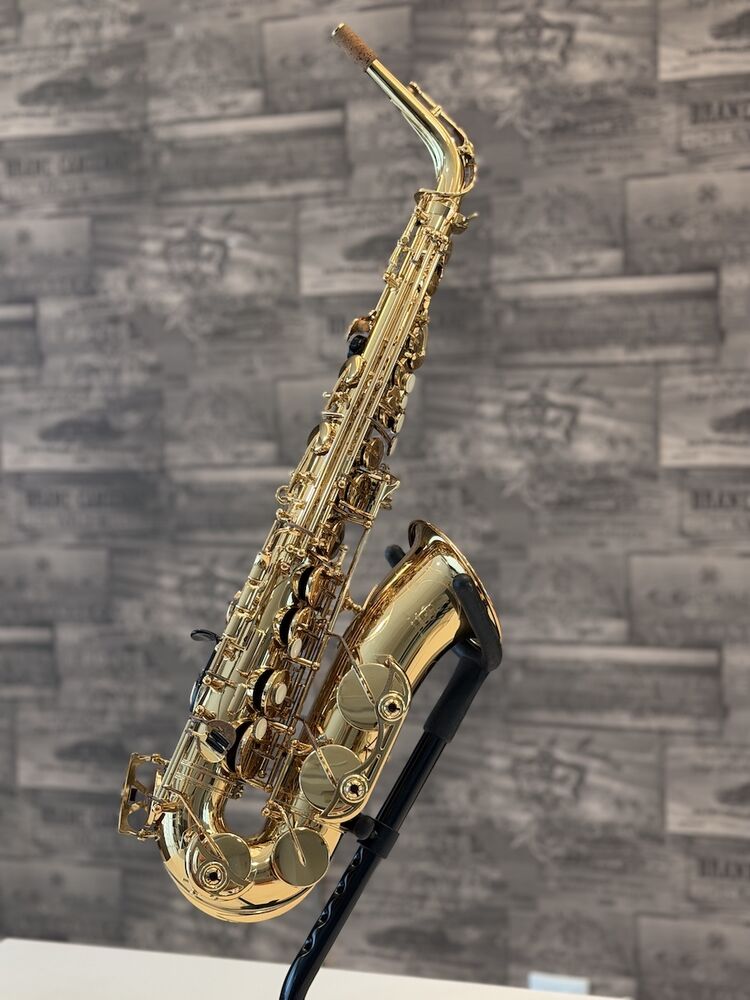
That gap is the whole argument. The YAS-62 has been Yamaha’s professional workhorse for decades, and a cared-for example does not stop being a professional instrument because someone else played it first. What matters is condition, which is why we grade every saxophone out of 10 across cosmetics, mechanics, and playability before it goes on the site. You can read how our grading rubric works if you want the detail.
The same logic applies higher up. Our current pre-owned Selmer Paris Series III alto, graded 9 out of 10, is listed at RM16,000. A new Selmer Paris alto starts around RM18,000 in Malaysia and climbs well past RM40,000 depending on the model. Pre-owned is how a working player gets Selmer Paris keywork without Selmer Paris depreciation.
Which saxophone brands are worth it in Malaysia?
Brand matters on saxophones, mostly because it predicts build consistency and resale value. Our working take, from instruments that have passed through our hands:
Yamaha is the safest choice at every level. The YAS-280 is the standard student recommendation, the YAS-62 is the professional workhorse, and the Custom line competes with anything made. Yamaha also holds its value unusually well in Malaysia, which matters when you upgrade later.
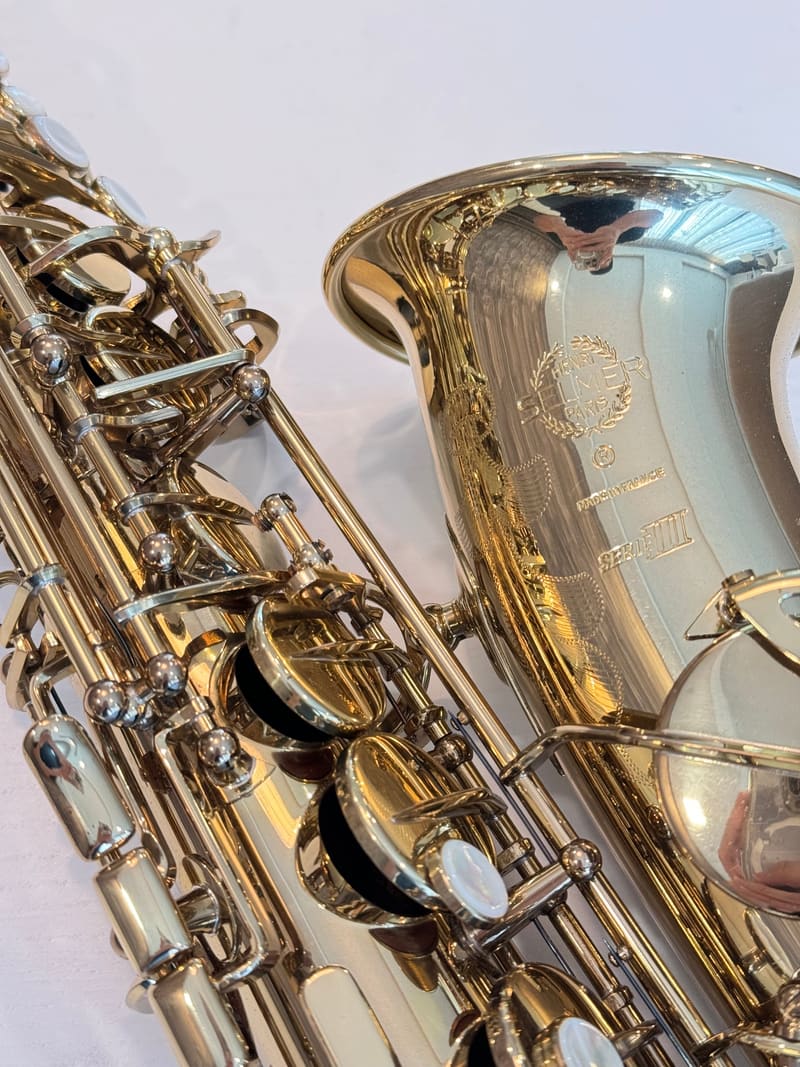
Selmer Paris is the professional benchmark. A large share of the world’s professional saxophonists play one, and the Series II and Series III altos remain the reference points other pro horns are measured against. New ones are expensive in Malaysia because of the import premium, which makes a graded pre-owned example the value play.
Yanagisawa builds superb professional saxophones with a reputation for flawless intonation, and is worth trying if you find one locally.
Jupiter and similar student brands cover the beginner market sensibly. They are honest starter instruments, just expect to upgrade within a few years if the player is serious.
Unbranded budget saxophones from online marketplaces are the one category we steer people away from. Some play acceptably, many do not seal properly out of the box, and almost none hold any resale value.
What to check when buying a used saxophone in Malaysia
If you are buying privately on Carousell, Mudah, or Facebook Marketplace, check these five things, or bring someone who plays:
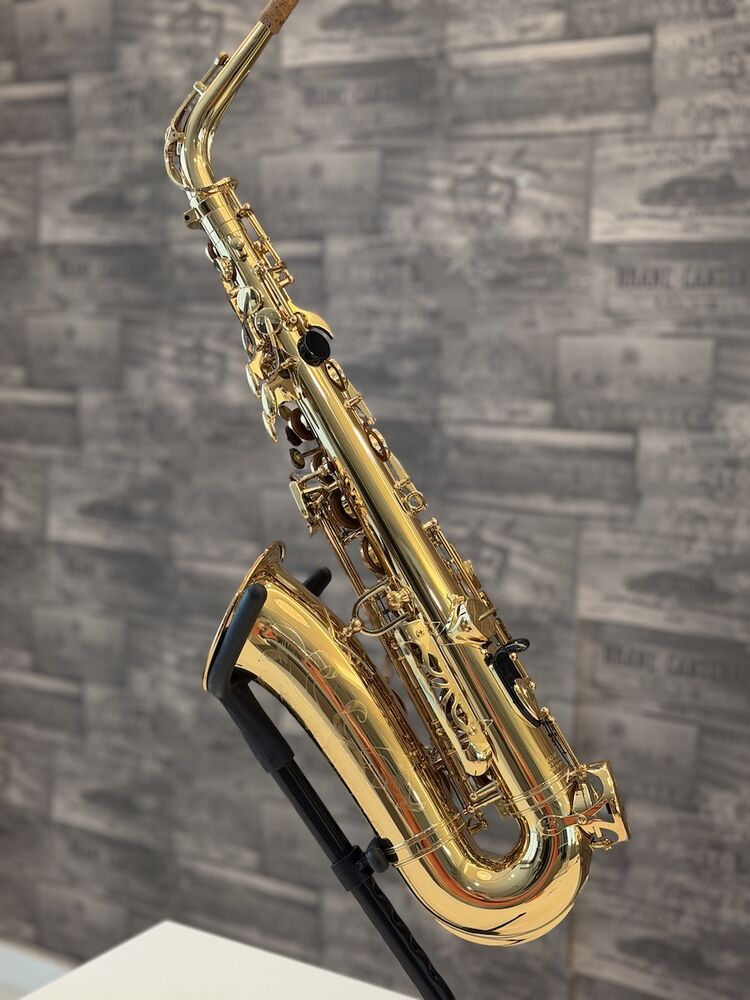
Pads and sealing. Worn or hardened pads leak air, and a full repad in Malaysia is a significant job that can erase the savings on a cheap purchase. Press each key gently and listen for a soft, even thump.
Key action. Keys should move quietly and spring back crisply. Sluggish or clattery action points to worn corks, felts, or bent rods.
Neck fit. The neck should slide in snugly and hold position without force. A loose neck joint leaks air and is awkward to fix well.
Lacquer and corrosion. Cosmetic lacquer wear is normal and does not affect sound. What you are watching for in Malaysia’s humidity is pitting or corrosion around tone holes and under the keywork, signs the instrument was stored damp.
Play it, or hear it played. Every note from low Bb to high F# should speak without fighting. If the seller will not let you play it, that tells you something too.
Mechanical condition is the expensive part; cosmetics are not. This is exactly why every saxophone we list is play-tested first and photographed honestly, wear included, so you can make a decision from the listing alone.
A small local note: Malaysia’s heat and humidity are hard on pads and springs. Whatever you buy, swab it after playing, leave the case open to air now and then, and keep a silica pouch in the case.
Where to buy a saxophone in Malaysia
You have three realistic options, and they suit different buyers:
Marketplaces (Carousell, Mudah, Facebook Marketplace). The widest selection and the lowest sticker prices, but no grading, no recourse, and the inspection risk is entirely yours.
General music retailers. Stores like JS Music and Bentley Music stock mostly new student and intermediate saxophones. Good for warranty on new instruments, less so for professional or pre-owned.
Specialist pre-owned sellers. This is where graded, play-tested pre-owned instruments come from. You pay a little more than a private deal, and in exchange the condition is documented, the instrument has been played by someone who knows what to listen for, and you can try it before committing.
We sit in that last group. Every saxophone on our saxophone listings is played and tested by a working musician, photographed from every angle, and graded out of 10 with the wear called out. Tryouts happen in KL by appointment, and we ship across Malaysia.
If horns are also on your radar, we wrote the same kind of guide for French horn prices in Malaysia.
Frequently asked questions
How much does a beginner saxophone cost in Malaysia? A proper new student alto runs RM3,000 to RM8,000 in 2026, with the Yamaha YAS-280 class at the upper end of that range. Below RM3,000 you are in budget-import territory where quality is a lottery. A well-kept used student Yamaha at RM2,500 to RM5,000 is often the best first saxophone.
Should I buy an alto or tenor saxophone first? Alto. It is cheaper at every level, easier to handle, and standard for beginners in Malaysian school bands. Move to tenor later if the sound calls you; the fingering carries over.
Is a pre-owned professional saxophone better than a new student one? At the same price, almost always yes. A graded pre-owned YAS-62 outplays and outlasts a new entry-level alto at similar money, and it holds resale value. The only requirement is verified condition, which is what honest grading is for.
Why are saxophones so expensive? Hundreds of precisely fitted parts, hand-adjusted keywork, and quality pads make saxophones costly to build, and in Malaysia nearly all serious instruments are imported, which adds shipping and exchange-rate costs on top.
Ready to look at actual instruments? Browse the current saxophones for sale or WhatsApp us with your level and budget. We will point you to the right saxophone, honestly, even if it is not one we currently stock.